Davenport IA Epoxy Flooring has installed industrial epoxy flooring for 20+ years in Davenport, IA, serving surrounding cities including Eldridge, Rock Island, Bettendorf, Moline and Milan. Plant floors, warehouses and fabrication shops take more abuse than any other slab we coat: forklifts, steel wheels, dropped parts, oil, coolant, hydraulic fluid and aggressive cleaners, often on a floor that cannot stop for long. We design each system around what actually happens on that floor.
Every job starts with the slab. We shot blast or diamond grind to a named surface profile, map cracks, joints and damaged areas, and test moisture before pricing. The written proposal sets the product line, coat count and finished thickness for each zone, so a plant manager can check the work against the specification.
We also plan around production. Work is phased by zone, scheduled for nights, weekends and shutdowns, and kept separate from active areas with barricades and dust control, so the rest of the facility stays running.
Industrial Floor Systems Matched to the Work
Machine Shops and Fabrication Floors
Machine shops deal with cutting oil, coolant, metal chips and heavy parts hitting the floor. A thick 100% solids epoxy body coat with a chemical-resistant topcoat keeps fluids on the surface and absorbs impact. Areas under machines and at loading points get extra build where wear is heaviest. A sealed floor also makes chip and fluid cleanup faster, and a lighter color improves visibility for dropped parts.
Warehouses, Docks and Forklift Lanes
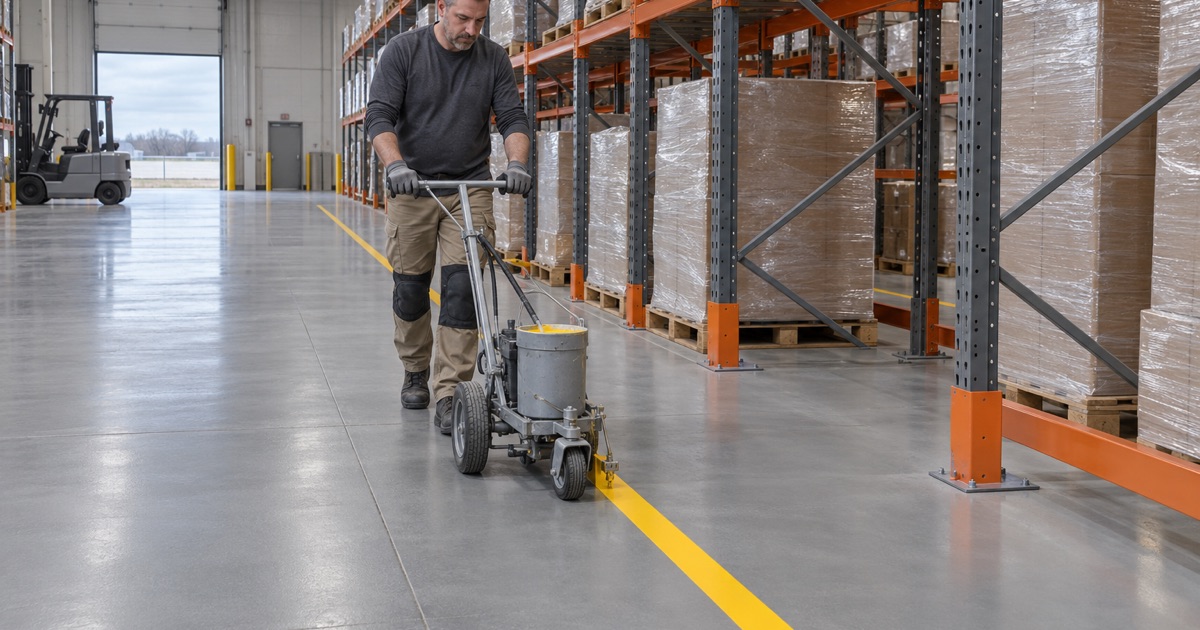
Forklift and pallet jack traffic wears coatings in narrow lanes and at turning points, while dock plates and trailers bring impact and road salt. We specify thicker builds and abrasion-resistant topcoats in traffic lanes and around docks. Open storage areas often stay as polished concrete, with coatings used where they add real value.
Near the docks, the floor takes the same brine and slush that damage garage slabs in winter. A sealed surface keeps that salt out of the concrete.
Chemical, Battery and Washdown Areas
Battery charging rooms, chemical storage, paint areas and wash bays need floors chosen for the specific chemicals they see. Standard epoxy handles many oils and cleaners, while concentrated acids and solvents may need a novolac epoxy. Areas with hot water or steam cleaning are often better served by urethane cement.
We ask for your chemical list and safety data sheets before choosing a system. That keeps the coating from softening or staining months after the job is done.
Food and Beverage Production
Food and beverage plants clean with hot water, steam and sanitizers that break down standard epoxy over time. Urethane cement systems tolerate thermal shock and many food acids, and they can be coved up walls and around equipment pads. Slope to drains matters, so water does not stand on the surface between cleanings.
Preparing an Industrial Slab
Shot Blasting, Grinding and Coating Removal
Large open areas are shot blasted for a fast, uniform profile, with grinders used along walls, racking and machine bases. Old coatings, striping and embedded contaminants come off in the same step. Dust and debris are collected at the machine, never rinsed toward floor drains or storm inlets.
Oil-soaked concrete near machines is degreased and ground until clean concrete appears. Badly saturated areas may need cutting out and patching, since oil wicking up will break the bond.
Joints, Cracks and Damaged Concrete
Industrial slabs often have spalled joints, broken edges and worn areas from years of traffic. We rebuild joint edges with rigid repair mortar, fill or honor control joints based on how the slab moves, and patch damaged sections. A coating applied over broken edges simply breaks along with them.
Moisture Testing Older and Newer Slabs
Older plant slabs may sit without a vapor retarder, and new slabs may still be drying. We test with ASTM F1869 calcium chloride kits or ASTM F2170 relative humidity probes and compare the readings with the coating maker’s limits. A moisture-mitigation primer goes down where the readings call for it.
Scheduling Around Production
Zones, Shifts and Shutdowns
We divide the floor into zones that match your production flow and schedule each one around shifts, weekends and planned shutdowns. Barricades, signage and dust control keep work areas separate from active ones. The schedule is written into the proposal so supervisors can plan material and equipment moves.
Where downtime is very limited, fast-cure primers and polyaspartic topcoats can return a zone to service faster. We explain the cost and working-time trade-offs before choosing them.
Temperature and Cure in Unheated Buildings
Many warehouses and shops run cold in winter, and Davenport sees freezing nights from mid-October through April. Coatings need the slab above the product minimum and a safe dew point spread at the surface, or they may cure soft or blush. We measure before every coat and plan temporary heat or a later date when needed.
Safety, Rules and Paperwork
Safety Striping and Slip Resistance
Pedestrian walkways, forklift lanes, hazard zones and equipment boundaries can be marked in contrasting colors built into the coating. Broadcast aggregate adds slip resistance in wet or oily areas. These features support plant safety programs and outlast painted lines.
Insurance, Registration and VOC Rules
Industrial projects carry the certificate of insurance the owner, contractor or permit office requires. We explain Iowa contractor registration under Iowa Code chapter 91C and any city licensing that applies. Products are chosen to meet the federal coatings rule in 40 CFR 59 Subpart D, and Illinois Part 223 limits on Illinois-side jobs.
Plants along the I-80 corridor and in the Eastern Iowa Industrial Center are the kind of facilities these systems are built for. Each project is quoted under the rules for the state and city where the floor sits.
- 20+ Years in Business
- Moisture Tested Before Pricing
- Free Written Estimates